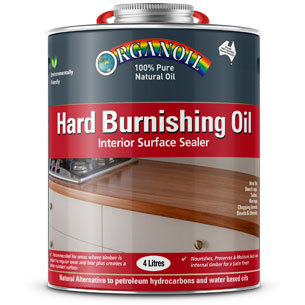
Hard Burnishing Oil

PREP INFO SESSION: ORGANOIL Hard Burnishing Oil (Wet Sanding Technique)

PREP INFO SESSION: ORGANOIL Hard Burnishing Oil (Power Sanding Technique)

Approved Specialists

A stunning and simple to maintain Organoil Floor Finish can be applied by one of our approved floor sanding and finishing specialists.

ACT

Canberra Metro
Monaro Timbers
02 6280 6467

NSW

Sydney & Blue Mountains
Mister Stain
0425 340 597
NSW City / Country – QLD Country
Lowe Floor Sanding (John Lowe)
0429 656 175
Bathurst
Bathurst & District Floor Sanding (Brett Lowe)
0429 362 436
Sydney
Eurofloors (John Waller)
0425 251 500
Ballina
C M Timber Flooring (Chris Mundy)
0422 982 008
Sydney Hills District, North Shore
AJ Flooring (David and Fiona)
0408 659 109

QLD

Brisbane
Alliance Floorsanding (Sharman Wrightson)
0416 137 800
Brisbane, Gold Coast, Sunshine Coast
Hilston Wood Floors (Jim)
0423 463 840

SA

Adelaide
Adelaide Hills Floor Sanding (Scott)
0417 847 288

VIC

Sth East Melbourne & Gippsland
Floorcraft Timber Flooring (Peter King)
0419 361 705
Greater Melbourne
TC Complete Flooring (Tony)
0417 301 976

TAS

Launceston
Ubeaut Floor Sanding (Vaughan)
0408 590 314

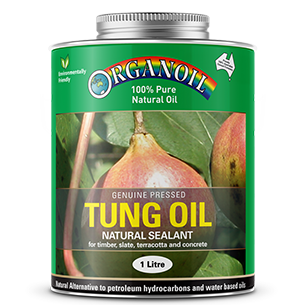
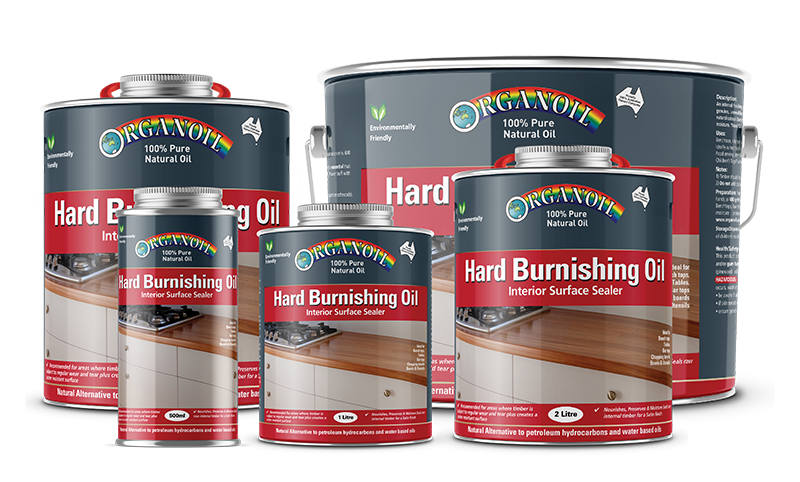
An internal finishing oil formulated from natural plant oils, with genuine Tung Oil as the major component. Recommended for areas where timber is subject to regular wear & tear, it creates a water-resistant surface. Suitable for flooring, bench tops, tabletops & food serving items.

Nourishes, preserves & moisturises. Natural colour/character enhancement. Seals raw internal timber for satin finish. Natural alternative to Petroleum hydrocarbons and water based oils.

  • Chopping boards & bowls
  • Kitchen Cabinetry
  • Flooring
  • Bench, Table & Bar Tops

500mL, 1L, 2L, 4L & 10L

Up to 18 m2

Brush or Lambswool Applicator

2

See data sheet

Transparent Matt Finish, Higher gloss achievable with Burnishing technique. See youtube video

Frequently Asked Questions

Organoil Hard Burnishing Oil uses the same formula it always has and the instructions for its use remain the same.

It has been specifically formulated using genuine Tung Nut Oil to finish Tabletops, Bench Tops, Bar Tops and Food Serving items.

The best results from the product are using a “wet sanding” procedure and can be finished by hand sanding, by random orbital sander or on lathe. Refer to:

The wet on wet (burnishing) sanding technique

Natural Plant Oils penetrate deep into timbers. Light also travels with the oils along the timber fibres into the wood, enhancing all the colour, glow and character of the structure. When the light reflects back it will however reveal any imperfections in the surface sanding. By using Wet on Wet friction sanding technique you will be able to minimise sanding imperfections.

Step 1: Fine sand timbers to minimum 400 grit (powered disc) or hand sand to 600 grit WET and DRY paper. Sand until timber begins to show a slight lustre. Retain the sawdust in the last paper used – do not dust off as it will be used as a grain filler in the next process.

Step 2: Apply first coat of Oil to all surfaces of the project including the underside and or rearside allowing the oil time to soak well into the timber; 2 to 3 hours later ( not overnight ) apply a light second coat after first application to the surfaces to be burnished also allowing a short time for oil to be absorbed. Wipe off excess or pooling oil leaving a moist surface , then begin to massage or burnish the oil into the timber surface with the last paper used in Step 1. The Oil and sawdust will form a slurry paste and should be worked to fill the pore structure of the timber, if needing more slurry to close the pores of the timber, add oil only to the surface of the paper being used. Should you have an excess of slurry clean the face of the paper with an Oil dampened cloth making sure not to add Oil to the timber surface. By now you should have achieved a satin finish across the surface. Wipe excess slurry from timber surface with a paper towel. One or more pieces of paper towel may be necessary to make sure surface is free of oil before moving to Step 3. NB Put the lid back on the can to resist the temptation of adding more oil to the timber.

Step 3: To obtain a higher lustre than a satin finish, carry on sanding (manual or power) using 1200 grit wet and dry paper or 1200 grit velcro backed (hook and loop) discs. Two to three sandings with 1200 grit paper may be necessary to bring up the desired finish. Paper face should at all times remain clean and free from excess slurry. Should paper face be oily, wipe timber surface with paper towel and change to a new grit paper. Finish off with a clean piece of paper towel. Note: For cabinetry finish it is highly recommended to continue burnishing at 1500, 2000 grit wet and dry paper—guaranteed to put a “gleam” in the finish.

Step 4: To achieve the “ultimate” with an oil finish it is necessary to leave for 24 to 48 hours and then power buff with lambswool or lint free cloth. NOTE: Project should remain to cure in a well ventilated area free of condensation and moisture. Benchtops and table tops should not be exposed to water or heat for at least 3 to 4 days. To avoid rust marking do not leave “wet” tin cans on benchtops overnight.

Yes, follow the instructions using the same grit papers as per the Random orbital instructions.

You should not use steel wool. The reason why is: by following the sanding with steel wool it will close the pore structure down thereby restricting the ability of the oil to penetrate into the substrate where it is designed to cure/harden. It may also leave metal particles that can cause black spots in the finish.

A lambswool pad should only be used for buffing 24-48 hours after the final burnishing step.

Please see the recommended finish items.

Only two coats should be applied. 1st coat then a second coat leaving time between to allow for penetration. Do Not Sand between coats as this will prevent the penetration of the second coat!

Subsequent coats of oil after the second coat would only sit on the surface and as such not harden.

Note: 1st coat should also be applied (brushed on) to all sides of the project to prevent moisture intake on the underside and end grain. There is no need to sand this coat into the timber.

Adding oil after the burnishing process will wash out the slurry paste created and cause finish to dull back. Should there be excess oil at the surface prior to using the polishing grit papers then it will form a paste and reduce their ability to provide the heat to bond the oil into the timber.
Please refer to the Rectification Procedure.

Times or approximates can’t be given due to all the variables as well as the size of the project. As a rule of thumb around 30 minutes on softwood and maybe an hour on hardwoods.

Look for signs at the surface of the wood, and add oil when 1st coat has penetrated.

Should oil be pooling in areas then brush in to areas that are drying quicker.

The second coat should be applied sparingly and should not be pooling otherwise it will splash during sanding process.

The burnishing/polishing process should be completed in sequence as per instructions. Should the oil be left overnight between coats then the second coat would pool at the surface and not be able to penetrate and cure within the substrate.
Please refer to the Rectification Procedure.

  1. Not sanding with the correct grit papers to start prior to application of 1st coat of oil.
  2. Over application of oil, 2 coats only.
  3. Using additional grit papers between burnishing and polishing grit papers.
  4. Failing to wipe timber surface down with paper towel after burnishing prior to moving onto polishing papers. Paper towel should also be used after each polishing paper.
  5. Upon completion it is important to allow the finish to dry in a well ventilated area free of moisture and condensation that will cause raised fibres as well as dulling. A closed room is not advocated.
  6. Allow adequate curing time prior to subjecting the finish to heavy usage water and heat.

Please refer to the Rectification Procedure.

Please refer to the Rectification Procedure.

ORGANOIL products are 100% oil in the can, therefore in most instances 2 COATS ONLY are required unless otherwise specified. The addition of more coats of oil will not improve the lustre (shine) and may in many cases result in a dull and patchy appearance. Should your project exhibit the above finish it will be because oil has been added through the polishing procedure thereby continuing to wash out the slurry filler and also the surface of the timber will be too wet when using the polishing grit papers (1200, 1500, 2000). Therefore, there will not be enough heat generated to glaze the oil at the timber surface.

STEP 1 Re-sand timber surface to 220 grit paper to breakdown excess oil at the surface. Should the paper face become clogged renew paper.

STEP 2 Move to 320/400 grit (power disc) or hand sand to 600 grit Wet and Dry paper, continue sanding until timber surface is smooth all over. Should the paper face clog with old slurry, clean down with oil dampened cloth.

STEP 3 Apply a coating of oil to timber surface allowing time to penetrate (approximately 10-20 mins). Carry on burnishing with previous paper used this will generate a “slurry” which should be worked to a consistency of toothpaste.

If needing more slurry to close the pores of the timber or should the slurry become powdery, add more oil ONLY to the surface of the paper being used.

Wipe away excess slurry with paper towel then finish with a clean piece of paper towel under machine (refer to How to Videos). Use 2,3 or more pieces making sure the final piece of paper towel is dry and free of oil prior to moving to 1200grit (Step 4).

STEP 4 Do not apply any more oil! Move to 1200 grit Wet and Dry paper and carry on burnishing (now polishing). Two or three burnishing with new paper may be necessary to bring up the desired finish.

Note: Paper face should at all times remain clean and free from excess oil and slurry.

Finish with paper towel under machine prior to moving to 1500 grit.

STEP 5 If seeking an even higher lustre it is recommended to continue burnishing using 1500/2000 grit papers. Finish with paper towel under machine making sure dry and free of oil

STEP 6 Allow the oiled surface 24-48 hours to cure then power buff with lambs wool pad. Allow 96 hours before using water near finish.

No. This product does not contain Chemical driers or Liquid Petroleum Hydrocarbons that are the main cause of other products to “Gel” in the can once opened. It is strongly recommended that the product should be decanted into a smaller vessel when using that way contaminates from brushes or cloths will not be introduced back into the can.

No. Stains slow down the drying time and on some timbers do not give a uniform colour. With the sanding procedure you actually sand the colour out of the timber.

Normal day to day care

  • Wipe down with a soft damp cloth (do not use harsh detergents or cleaners) then dry off with a soft lint free cloth.
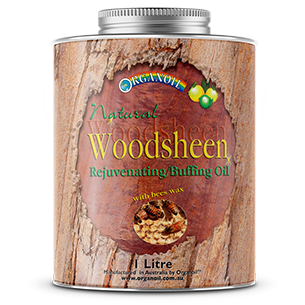
  • Should the surface become dull or dry looking, rejuvenate with Organoil Woodsheen. Sparingly spray or wipe on a light coat of Woodsheen and straight away wipe over with a clean lint free cloth leaving surface free of oil. Allow 20 to 30 minutes then a final buff with a clean lint free cloth. Allow 4-6 hours before using area.

PREP INFO SESSION: ORGANOIL Hard Burnishing Oil (Wet Sanding Technique)

PREP INFO SESSION: ORGANOIL Hard Burnishing Oil (Power Sanding Technique)

An internal finishing oil formulated from natural plant oils, with genuine Tung Oil as the major component. Recommended for areas where timber is subject to regular wear & tear, it creates a water-resistant surface. Suitable for flooring, bench tops, tabletops & food serving items.

Nourishes, preserves & moisturises. Natural colour/character enhancement. Seals raw internal timber for satin finish. Natural alternative to Petroleum hydrocarbons and water based oils.

  • Chopping boards & bowls
  • Kitchen Cabinetry
  • Flooring
  • Bench, Table & Bar Tops

500mL, 1L, 2L, 4L & 10L

Up to 18 m2

Brush or Lambswool Applicator

2

See data sheet

Transparent Matt Finish, Higher gloss achievable with Burnishing technique. See youtube video

Frequently Asked Questions

Organoil Hard Burnishing Oil uses the same formula it always has and the instructions for its use remain the same.

It has been specifically formulated using genuine Tung Nut Oil to finish Tabletops, Bench Tops, Bar Tops and Food Serving items.

The best results from the product are using a “wet sanding” procedure and can be finished by hand sanding, by random orbital sander or on lathe. Refer to:

The wet on wet (burnishing) sanding technique

Natural Plant Oils penetrate deep into timbers. Light also travels with the oils along the timber fibres into the wood, enhancing all the colour, glow and character of the structure. When the light reflects back it will however reveal any imperfections in the surface sanding. By using Wet on Wet friction sanding technique you will be able to minimise sanding imperfections.

Step 1: Fine sand timbers to minimum 400 grit (powered disc) or hand sand to 600 grit WET and DRY paper. Sand until timber begins to show a slight lustre. Retain the sawdust in the last paper used – do not dust off as it will be used as a grain filler in the next process.

Step 2: Apply first coat of Oil to all surfaces of the project including the underside and or rearside allowing the oil time to soak well into the timber; 2 to 3 hours later ( not overnight ) apply a light second coat after first application to the surfaces to be burnished also allowing a short time for oil to be absorbed. Wipe off excess or pooling oil leaving a moist surface , then begin to massage or burnish the oil into the timber surface with the last paper used in Step 1. The Oil and sawdust will form a slurry paste and should be worked to fill the pore structure of the timber, if needing more slurry to close the pores of the timber, add oil only to the surface of the paper being used. Should you have an excess of slurry clean the face of the paper with an Oil dampened cloth making sure not to add Oil to the timber surface. By now you should have achieved a satin finish across the surface. Wipe excess slurry from timber surface with a paper towel. One or more pieces of paper towel may be necessary to make sure surface is free of oil before moving to Step 3. NB Put the lid back on the can to resist the temptation of adding more oil to the timber.

Step 3: To obtain a higher lustre than a satin finish, carry on sanding (manual or power) using 1200 grit wet and dry paper or 1200 grit velcro backed (hook and loop) discs. Two to three sandings with 1200 grit paper may be necessary to bring up the desired finish. Paper face should at all times remain clean and free from excess slurry. Should paper face be oily, wipe timber surface with paper towel and change to a new grit paper. Finish off with a clean piece of paper towel. Note: For cabinetry finish it is highly recommended to continue burnishing at 1500, 2000 grit wet and dry paper—guaranteed to put a “gleam” in the finish.

Step 4: To achieve the “ultimate” with an oil finish it is necessary to leave for 24 to 48 hours and then power buff with lambswool or lint free cloth. NOTE: Project should remain to cure in a well ventilated area free of condensation and moisture. Benchtops and table tops should not be exposed to water or heat for at least 3 to 4 days. To avoid rust marking do not leave “wet” tin cans on benchtops overnight.

Yes, follow the instructions using the same grit papers as per the Random orbital instructions.

You should not use steel wool. The reason why is: by following the sanding with steel wool it will close the pore structure down thereby restricting the ability of the oil to penetrate into the substrate where it is designed to cure/harden. It may also leave metal particles that can cause black spots in the finish.

A lambswool pad should only be used for buffing 24-48 hours after the final burnishing step.

Please see the recommended finish items.

Only two coats should be applied. 1st coat then a second coat leaving time between to allow for penetration. Do Not Sand between coats as this will prevent the penetration of the second coat!

Subsequent coats of oil after the second coat would only sit on the surface and as such not harden.

Note: 1st coat should also be applied (brushed on) to all sides of the project to prevent moisture intake on the underside and end grain. There is no need to sand this coat into the timber.

Adding oil after the burnishing process will wash out the slurry paste created and cause finish to dull back. Should there be excess oil at the surface prior to using the polishing grit papers then it will form a paste and reduce their ability to provide the heat to bond the oil into the timber.
Please refer to the Rectification Procedure.

Times or approximates can’t be given due to all the variables as well as the size of the project. As a rule of thumb around 30 minutes on softwood and maybe an hour on hardwoods.

Look for signs at the surface of the wood, and add oil when 1st coat has penetrated.

Should oil be pooling in areas then brush in to areas that are drying quicker.

The second coat should be applied sparingly and should not be pooling otherwise it will splash during sanding process.

The burnishing/polishing process should be completed in sequence as per instructions. Should the oil be left overnight between coats then the second coat would pool at the surface and not be able to penetrate and cure within the substrate.
Please refer to the Rectification Procedure.

  1. Not sanding with the correct grit papers to start prior to application of 1st coat of oil.
  2. Over application of oil, 2 coats only.
  3. Using additional grit papers between burnishing and polishing grit papers.
  4. Failing to wipe timber surface down with paper towel after burnishing prior to moving onto polishing papers. Paper towel should also be used after each polishing paper.
  5. Upon completion it is important to allow the finish to dry in a well ventilated area free of moisture and condensation that will cause raised fibres as well as dulling. A closed room is not advocated.
  6. Allow adequate curing time prior to subjecting the finish to heavy usage water and heat.

Please refer to the Rectification Procedure.

Please refer to the Rectification Procedure.

ORGANOIL products are 100% oil in the can, therefore in most instances 2 COATS ONLY are required unless otherwise specified. The addition of more coats of oil will not improve the lustre (shine) and may in many cases result in a dull and patchy appearance. Should your project exhibit the above finish it will be because oil has been added through the polishing procedure thereby continuing to wash out the slurry filler and also the surface of the timber will be too wet when using the polishing grit papers (1200, 1500, 2000). Therefore, there will not be enough heat generated to glaze the oil at the timber surface.

STEP 1 Re-sand timber surface to 220 grit paper to breakdown excess oil at the surface. Should the paper face become clogged renew paper.

STEP 2 Move to 320/400 grit (power disc) or hand sand to 600 grit Wet and Dry paper, continue sanding until timber surface is smooth all over. Should the paper face clog with old slurry, clean down with oil dampened cloth.

STEP 3 Apply a coating of oil to timber surface allowing time to penetrate (approximately 10-20 mins). Carry on burnishing with previous paper used this will generate a “slurry” which should be worked to a consistency of toothpaste.

If needing more slurry to close the pores of the timber or should the slurry become powdery, add more oil ONLY to the surface of the paper being used.

Wipe away excess slurry with paper towel then finish with a clean piece of paper towel under machine (refer to How to Videos). Use 2,3 or more pieces making sure the final piece of paper towel is dry and free of oil prior to moving to 1200grit (Step 4).

STEP 4 Do not apply any more oil! Move to 1200 grit Wet and Dry paper and carry on burnishing (now polishing). Two or three burnishing with new paper may be necessary to bring up the desired finish.

Note: Paper face should at all times remain clean and free from excess oil and slurry.

Finish with paper towel under machine prior to moving to 1500 grit.

STEP 5 If seeking an even higher lustre it is recommended to continue burnishing using 1500/2000 grit papers. Finish with paper towel under machine making sure dry and free of oil

STEP 6 Allow the oiled surface 24-48 hours to cure then power buff with lambs wool pad. Allow 96 hours before using water near finish.
No. This product does not contain Chemical driers or Liquid Petroleum Hydrocarbons that are the main cause of other products to “Gel” in the can once opened. It is strongly recommended that the product should be decanted into a smaller vessel when using that way contaminates from brushes or cloths will not be introduced back into the can.

No. Stains slow down the drying time and on some timbers do not give a uniform colour. With the sanding procedure you actually sand the colour out of the timber.

Normal day to day care

  • Wipe down with a soft damp cloth (do not use harsh detergents or cleaners) then dry off with a soft lint free cloth.
  • Should the surface become dull or dry looking, rejuvenate with Organoil Woodsheen. Sparingly spray or wipe on a light coat of Woodsheen and straight away wipe over with a clean lint free cloth leaving surface free of oil. Allow 20 to 30 minutes then a final buff with a clean lint free cloth. Allow 4-6 hours before using area.

Approved Specialists

A stunning and simple to maintain Organoil Floor Finish can be applied by one of our approved floor sanding and finishing specialists.

ACT

Canberra Metro
Monaro Timbers
02 6280 6467

NSW

Sydney & Blue Mountains
Mister Stain
0425 340 597
NSW City / Country – QLD Country
Lowe Floor Sanding (John Lowe)
0429 656 175
Bathurst
Bathurst & District Floor Sanding (Brett Lowe)
0429 362 436
Sydney
Eurofloors (John Waller)
0425 251 500
Ballina
C M Timber Flooring (Chris Mundy)
0422 982 008
Sydney Hills District, North Shore
AJ Flooring (David and Fiona)
0408 659 109

QLD

Brisbane
Alliance Floorsanding (Sharman Wrightson)
0416 137 800
Brisbane, Gold Coast, Sunshine Coast
Hilston Wood Floors (Jim)
0423 463 840

SA

Adelaide
Adelaide Hills Floor Sanding (Scott)
0417 847 288

VIC

Sth East Melbourne & Gippsland
Floorcraft Timber Flooring (Peter King)
0419 361 705
Greater Melbourne
TC Complete Flooring (Tony)
0417 301 976

TAS

Launceston
Ubeaut Floor Sanding (Vaughan)
0408 590 314

PROUDLY 100% Australian Owned Australian Operated Australian Company

© Copyright - Prep Productions Pty Ltd. All rights reserved. - Site by: ANT Design